
Last year, global carbon dioxide emissions reached 363 billion tons,
a historic high.
The climate change caused by excessive carbon emissions
has greatly threatened the survival of humans on Earth.
Transportation is one of the key areas of carbon emissions.
Under the "dual carbon" goal,
it is imperative and arduous
to promote the low-carbon and green transformation of the transportation industry
and achieve sustainable development.
According to reports, in 2020, China's transportation sector emitted 930 million tons of carbon dioxide, accounting for 15% of the country's terminal carbon emissions and ranking third after industry and construction as the largest source of carbon emissions. In the entire transportation sector, road transportation accounted for 90% of carbon emissions, of which road passenger transportation accounted for 42%, 90% of which came from passenger cars; road freight transportation accounted for 45%, mainly from the carbon emissions of freight trucks.
As of the end of 2021, the national motor vehicle ownership reached 395 million vehicles, including 302 million cars. In 2021, the country registered 36.74 million new motor vehicles, including 26.22 million new cars.
In terms of car ownership, 79 cities across the country have more than 1 million vehicles. Among them, 35 cities have more than 2 million vehicles, and 20 cities have more than 3 million vehicles.
Over 5 million: Beijing, Chengdu, Chongqing
Over 4 million: Suzhou, Shanghai, Zhengzhou, Xi'an
Over 3 million: Wuhan, Shenzhen, Dongguan, Tianjin, and 13 other cities
In recent years, the energy consumption and emission issues in the transportation sector have received high attention from the whole society, and the management departments have taken a number of measures to promote the low-carbon transformation of transportation.
"Action Plan for Carbon Peaking by 2030"
● Listing "green and low-carbon actions for all" as one of the "top ten actions for carbon peaking"
"Fourteenth Five-Year Plan for Digital Transportation Development"
●Promoting the digital transformation and intelligent upgrading of transportation infrastructure
●Using information technology to promote emissions reduction and carbon reduction in the transportation industry
"Evaluation Index System for Building a Strong Transportation Country"
●Focusing on the coordination of transportation with economic society and ecological environment
●Setting evaluation indicators around "safety, convenience, efficiency, green, and economy"
Intelligent transportation can help alleviate traffic congestion and reduce carbon emissions in the transportation sector.
Data shows that in 2020, the total carbon dioxide reduced by the use of cloud computing worldwide was equivalent to taking nearly 26 million fuel vehicles off the road.
Intelligent transportation based on vehicle-road collaboration can not only improve road traffic efficiency by 15% to 30%, but also effectively reduce carbon emissions. It is estimated that by 2060, the total carbon reduction related to the use of artificial intelligence technologies will exceed 35 billion tons. Among them, in terms of carbon reduction in the transportation industry driven by information technology, the contribution of intelligent transportation technologies such as autonomous driving and intelligent parking will exceed 40%.
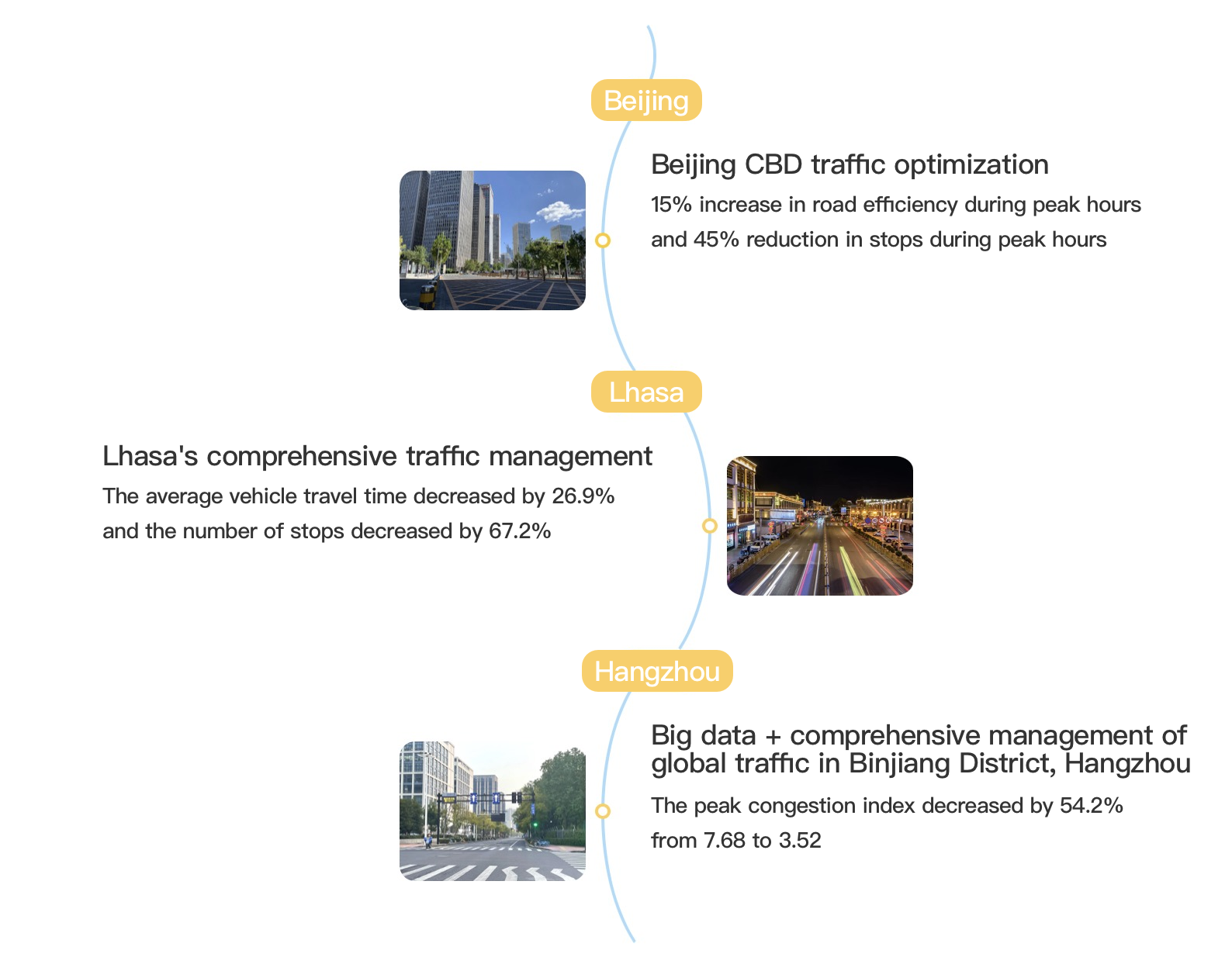
"Traffic congestion control" + "energy saving" + ...
TRANSINFO Technology continues to contribute technological strength to transportation emission reduction.
The road is long and arduous, but as long as we take action, we will get there.
Technology aids in achieving the dual carbon goals, and TRANSINFO Technology is taking action.
On March 26th, from 20:30 to 21:30,
turn off the lights for an hour for the Earth.
Protecting the Earth is about you and me.
Beyond the 60 minutes,
let's create a future together with action.
Practice low-carbon environmental protection with a score of 100.
✦ Source: People's Daily, Xinhua News Agency, China National Radio, etc.